How to configure country specifics in L’Invoice
The Country Specifics module lets you set up country-level parameters needed for compliance and country-adapted invoice workflows.
From here, you can add supported countries, define the Language for PDFs, and — where applicable — manage Product codes.
Why configure Country Specifics?
Setting up country-specific parameters ensures that invoice generation and document output (PDF language, country-required product codes) stay aligned with local regulations and supported e-invoicing standards.
1. Open Country Specifics
To start configuring country settings:
- Open Settings in the left navigation.
- Go to Country specifics.
- You will see the list of added countries and available actions.
On this screen, you can:
- add a new country
- set/edit “Language for PDFs”
- manage additional country features (e.g., products for Croatia)
- delete an existing country
2. Add a country
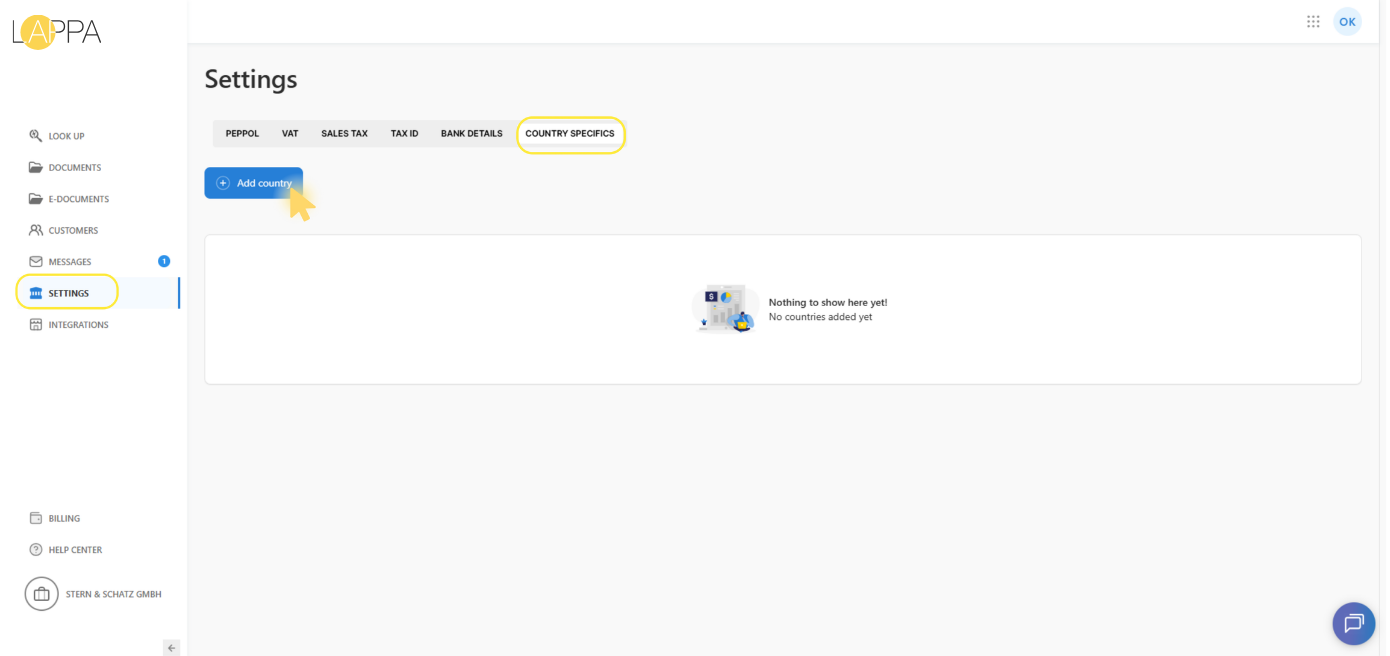
Click Add country to open the country selector.
Required field
- Country — you must select a country from the dropdown to proceed.
Actions
- Add Country — saves the country and refreshes the table.
- Cancel — closes the form without changes.
After a country is added, it becomes available in the country list and can be configured further.
3. Country list overview
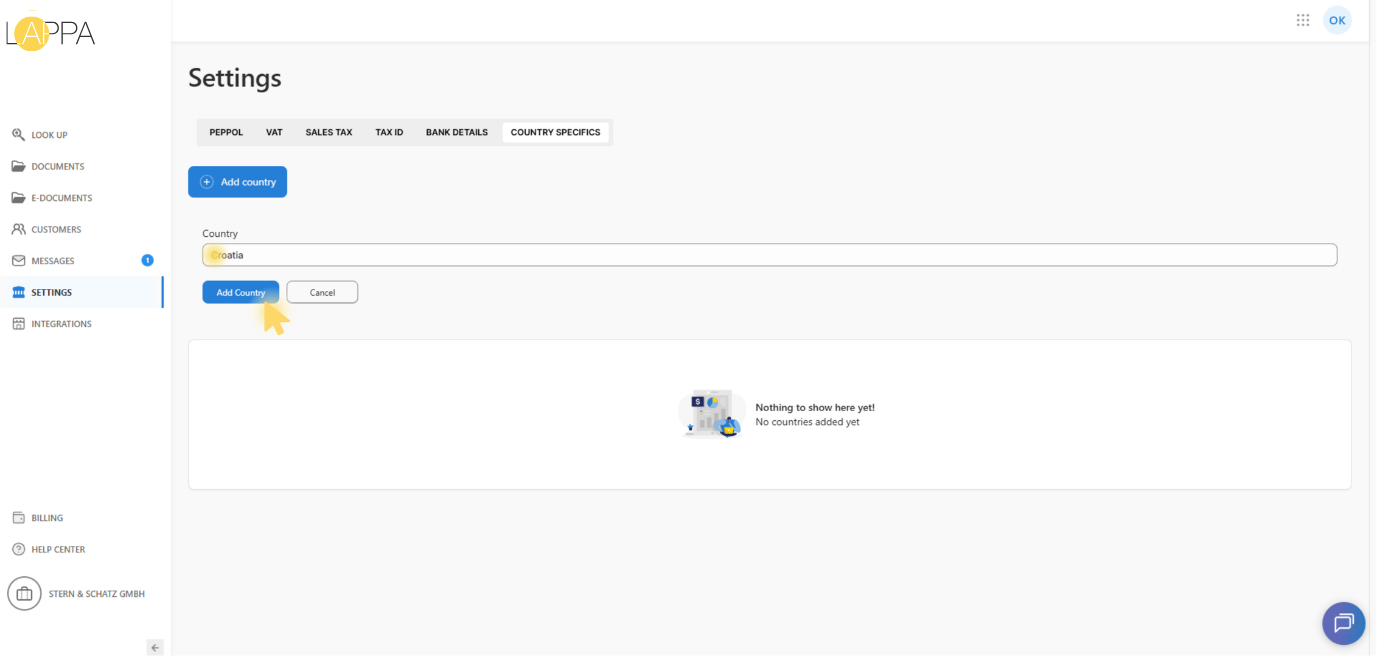
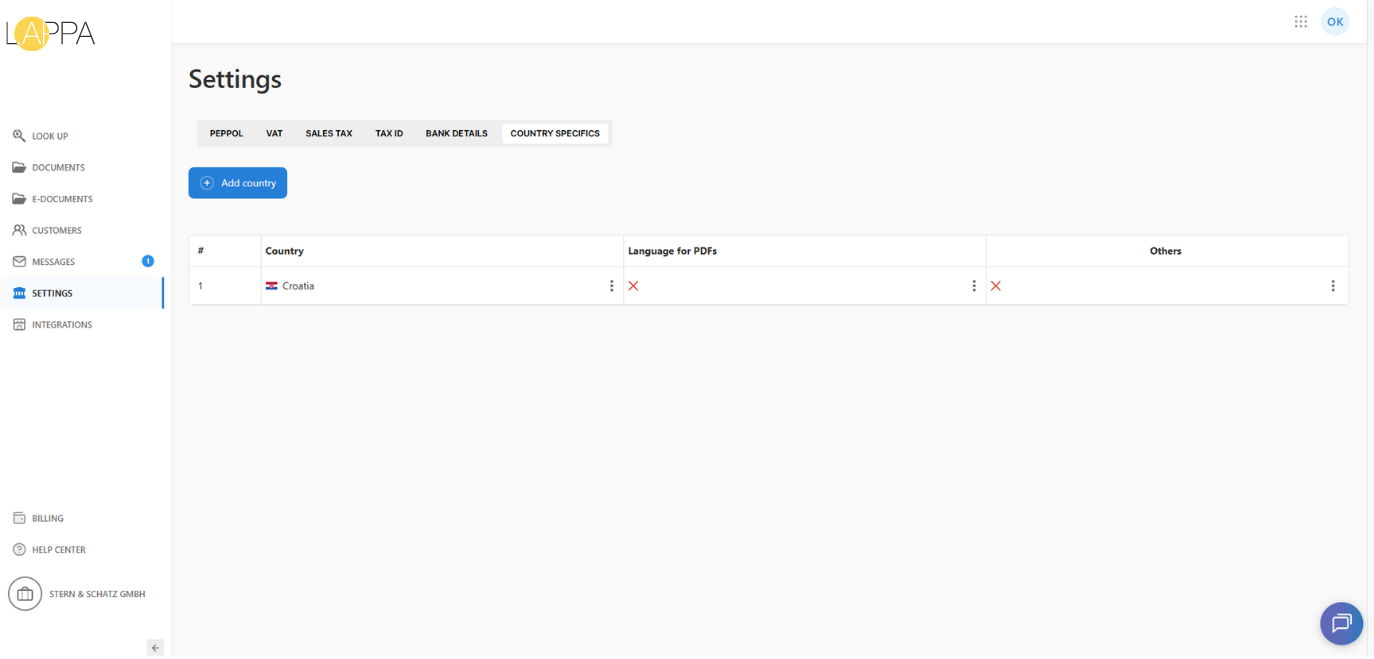
The table is organized into the following columns:
- # — row index
- Country — country name with a flag and actions menu
- Language for PDFs — shows whether a language is set (checkmark/cross) and actions menu
- Others — optional country-specific features (available only for some countries)
Each row has a “…” actions menu for configuring or removing entries.
4. Set “Language for PDFs”
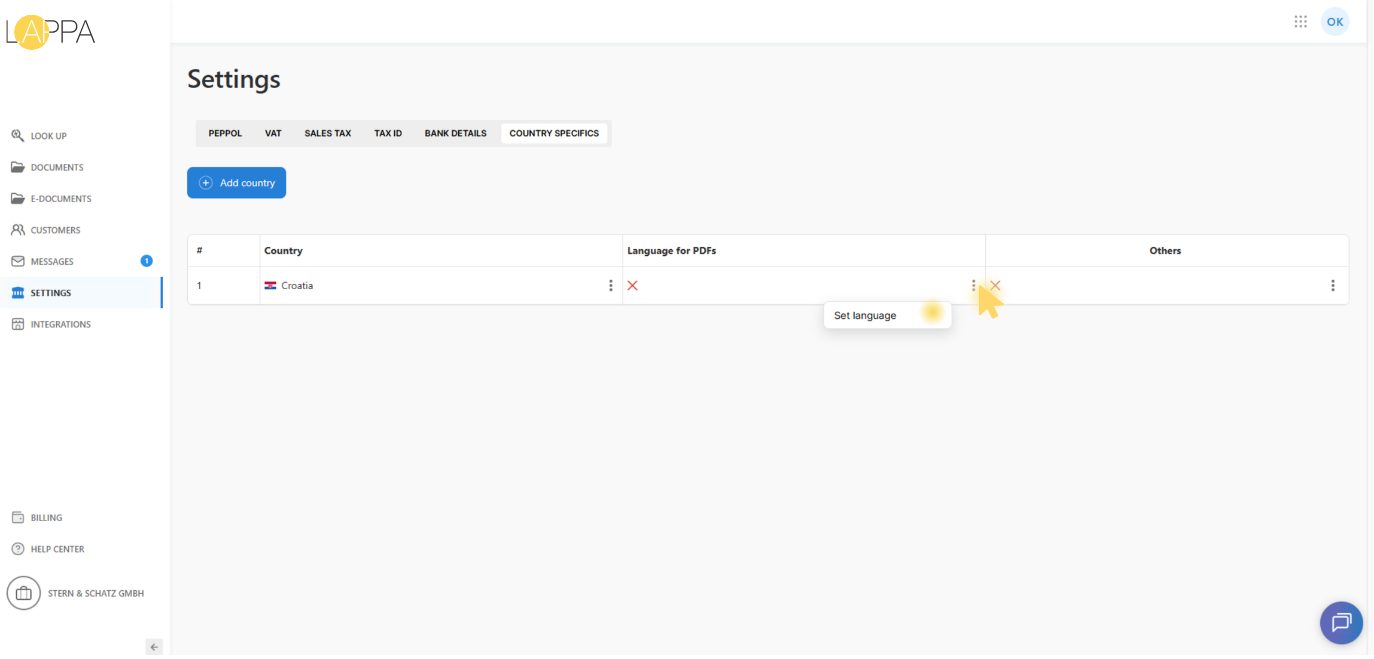
In the Language for PDFs column, click the “…” menu and select:
- Set language (if not set yet), or
- Edit language (if a language already exists)
Required field
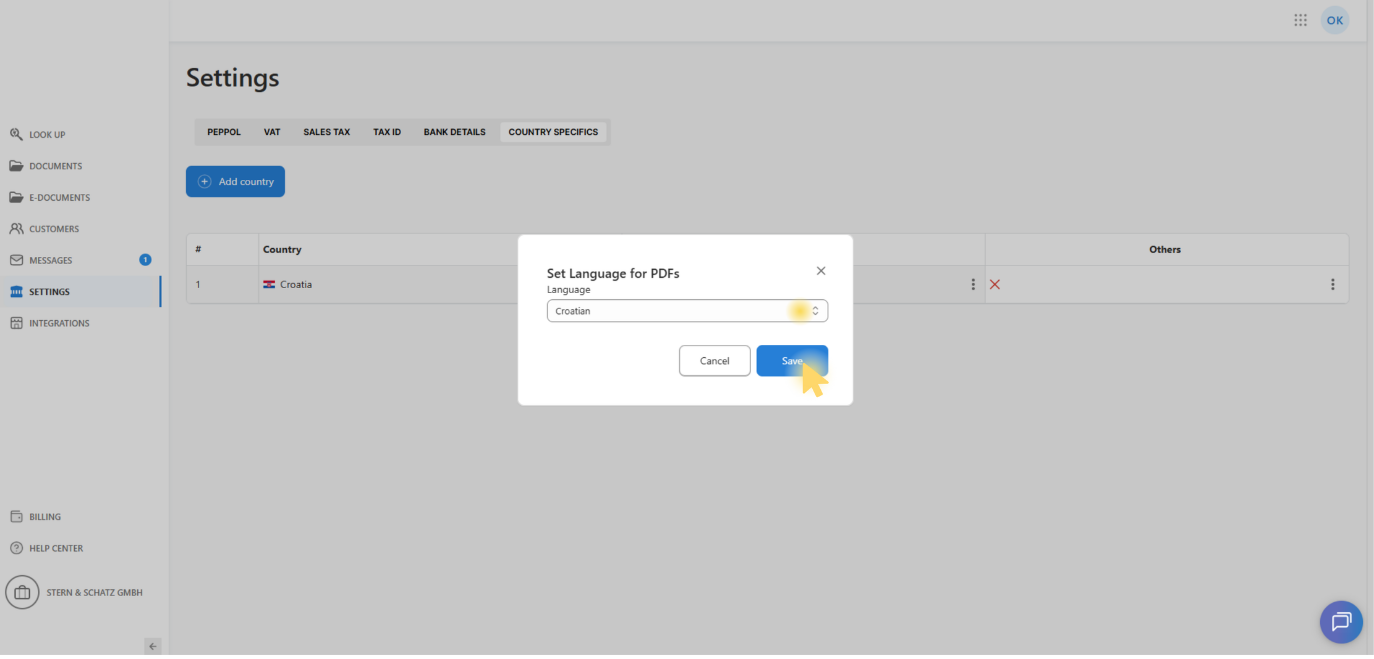
- Language — select a language from the dropdown.
Actions
- Cancel — closes the modal without changes.
- Save — saves the selected language and refreshes the list.
After saving, the column will show a checkmark alongside the name of the chosen language.
5. Manage country-specific features
Certain countries offer additional configuration options beyond the standard settings. These are accessible via the Others column in the Country specifics table.
Example: Croatia
When a country supports country-level product settings, the Others column displays a three-dot action menu with a Manage products option.
A cross icon in this column means that product configuration has not yet been set up for that country.
Clicking Manage products takes you to the Product codes page, where you can work with a country-specific list of product lines and classification codes.
On the Product codes page, you can:
- maintain product-specific data for the selected country;
- add new product lines directly to the table;
- edit or delete existing product entries using the actions menu;
- assign and manage country-specific classification codes required for local compliance.
These settings allow you to adapt product data and classification rules to the legal requirements of each supported country.
6. Delete a country
In the Country column, click the “…” menu and select Delete.
A confirmation dialog will appear with two options:
- Cancel — closes the modal without changes.
- Delete — removes the country from the list.
Confirming the deletion will fully remove the country entry from Country Specifics.